
The inspection
A solar home inspection goes beyond a general home inspection
A solar home inspection is an independent, third-party assessment of the solar system on a home that is changing hands — what is installed, whether it is working, and what condition it is in. A general home inspection does not cover that: most are explicitly non-invasive and note that panels are there. We measure what they're doing, read what the inverter has recorded, and put it in writing inside your inspection period.
- Starting at
- $399 — typical residential system
- On site
- 45 minutes – 2 hours
- Report
- About 24 hours after the visit
- Attendance
- Not required if access to the equipment is provided
Six systems, evaluated in sequence
What can be assessed depends on the system, the site and safe access.
Roof & mounting
Racking condition, penetrations and flashing where visible, array stability and alignment.
Modules
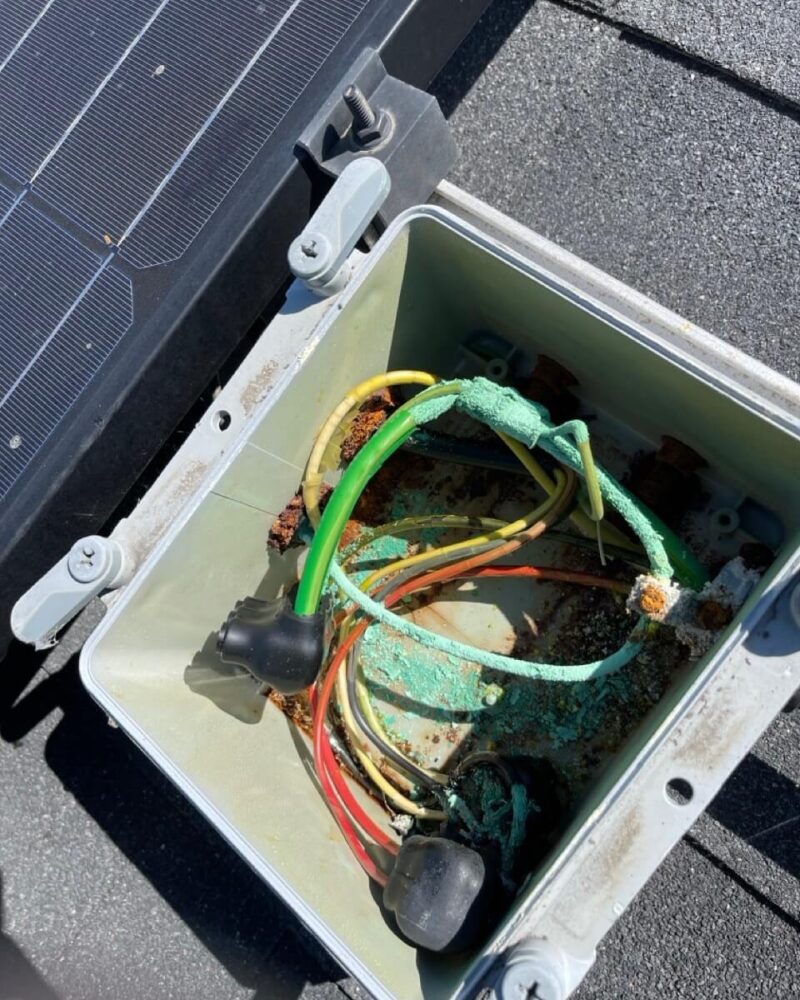
Manufacturer and model where we can identify them, visible damage, soiling, pest and debris conditions, and the condition of the wiring and wire management that can be seen from the array. See a wire-management finding in the sample report.
Electrical
Measurements where safely accessible, enclosures opened where appropriate, rapid shutdown evaluation.
Inverter
Diagnostics, error-log review, firmware version and update status, battery and storage readiness where present. What the fault history tells you.
Monitoring
Platform identification, connectivity, reporting status, who holds access and what transfer requires.
Performance
Function at the time of inspection, meter observations, orientation, tilt and shading context.
What you get
A report your client can act on
Each finding states what it is, how we know, and what it means for the transaction.
Every recommended step names who it belongs to — a solar repair company or installer, a roofer, the utility, or the owner.
Items are ranked so a Request for Repairs can be written without guessing what matters.
Extensive photo documentation of equipment, labels, measurements and any condition we flag.
Findings you can look at
Every condition we flag is photographed — in context, and close up. The next person to look at it, whether that is your client, a contractor or the agent on the other side, is looking at the same thing you are.
Why it matters in a negotiation
A written observation can be argued with. A photograph of the condition, with the measurement or the label beside it, generally cannot — which is what makes a finding usable in a Request for Repairs instead of the start of another round of phone calls.
A general home inspection is non-invasive by design. It notes that panels are there. It does not open the equipment, and it does not photograph what is inside it.
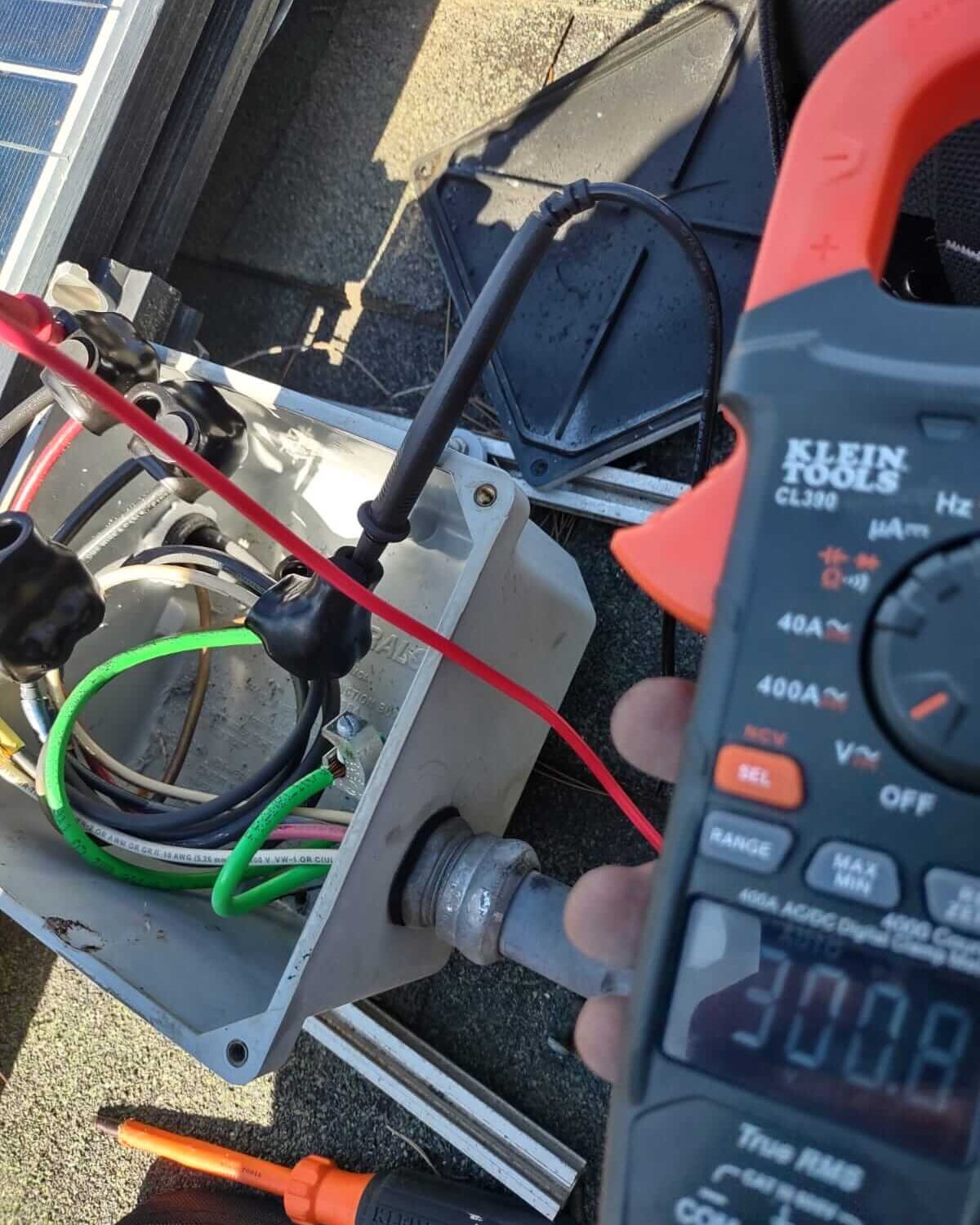
A measurement, as it is takenA live reading at the point of connection. The number in the report and the photograph of it being read are the same fact.
Independence
We inspect solar We don't sell it.
That is the reason a finding is worth putting in front of your client. What we find is never shaped by what we would rather sell you.
We don't arrive looking for work to sell, and an inspection is never a pitch for a replacement system.
What we report doesn't change based on who does the work, or whether any work happens at all. You always choose the contractor.
Once you've seen the findings, we can point you to the right kind of contractor and help you make sense of what you're quoted — so you don't have to start over explaining the system to someone new.
From request to decision
Six steps, and about a day from the visit to the report.
You send the address
Four short steps, and you don't need the solar paperwork to start. Tell us the contingency date — it drives how we schedule.
We call you
A real conversation before anyone books anything: what's on the property, what the transaction needs, what we can and can't establish.
We inspect the system
45 minutes to 2 hours on site, as applicable and where safely accessible.
Two people review the findings
Findings are normally reviewed by two sets of human eyes before the report is produced. The judgment is human.
The report lands
About 24 hours later, with every finding tied to a next step and a responsible party.
You make the call
With documented information instead of guesswork — and we stay available to walk you or your client through any of it.
Common questions
How long does a solar inspection take?
Between 45 minutes and two hours on site, depending on the size of the system, roof access and how much equipment there is to reach. Someone should be available to authorize access and sign the inspection authorization. Your presence is not required if access to the equipment is provided.
Do I get the report the same day?
Usually about 24 hours after the on-site inspection. That's a typical turnaround rather than a guaranteed deadline — a complicated system with a long error history takes longer to write up properly.
Is this the same as a home inspection?
No. A general home inspection is explicitly non-invasive and typically notes that panels are present. A solar inspection measures the electrical side, reads the inverter's error history and establishes whether the system is actually producing.
What if the system turns out to be fine?
Then you have that documented, which is worth having. A clean report is a normal outcome and it still resolves the question inside the inspection period.
Do you inspect batteries?
Battery and storage readiness is covered where storage is present. A full battery inspection costs additional — tell us what's installed when you request and we'll confirm scope before we schedule.
Working a weekend transaction? So are we
The office is open Monday–Friday 9am–6pm, but inspections run on weekends and requests are open around the clock. We'll call to confirm the date and time.
Requesting an inspection isn't a confirmed appointment — we'll contact you to confirm timing.